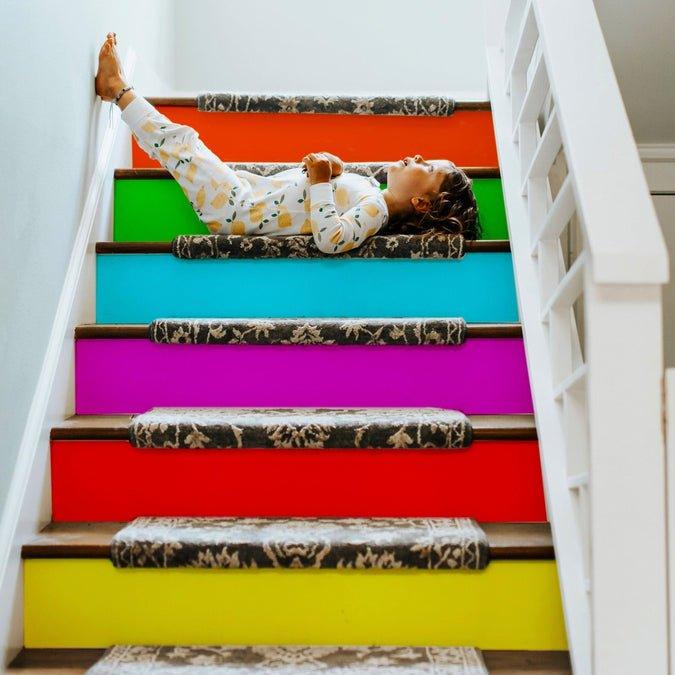
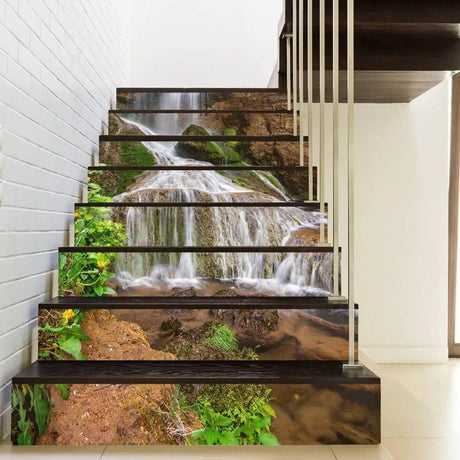
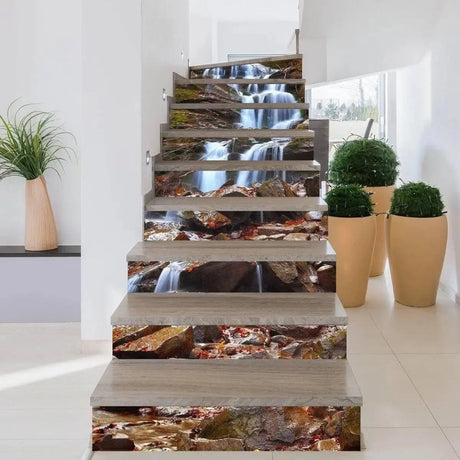
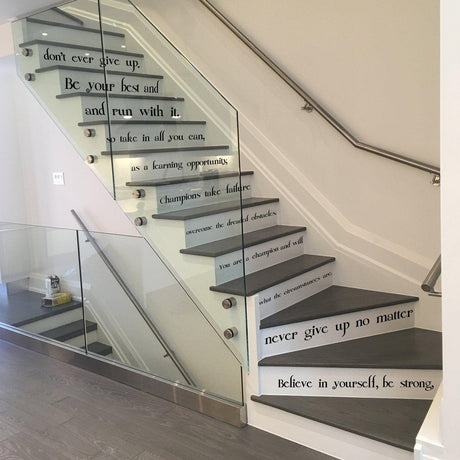
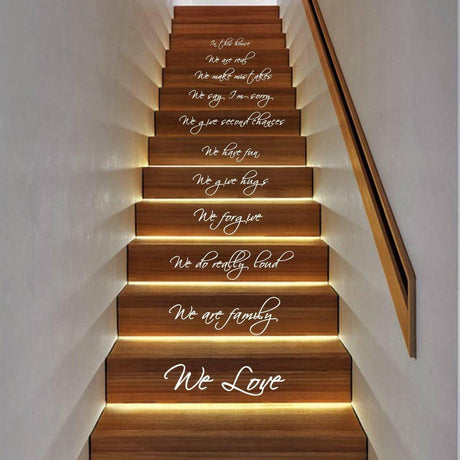
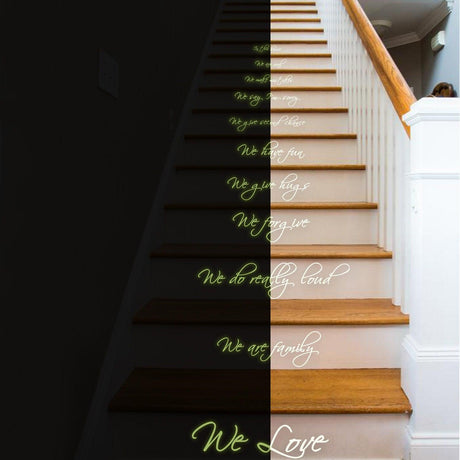
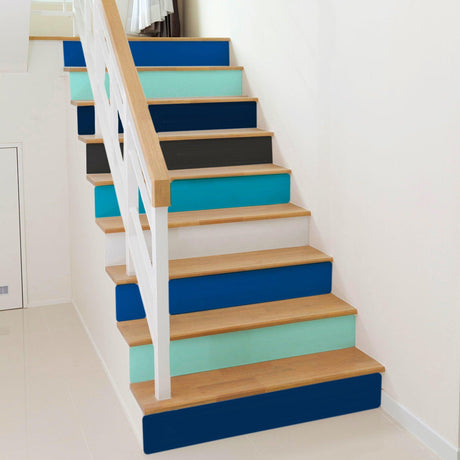
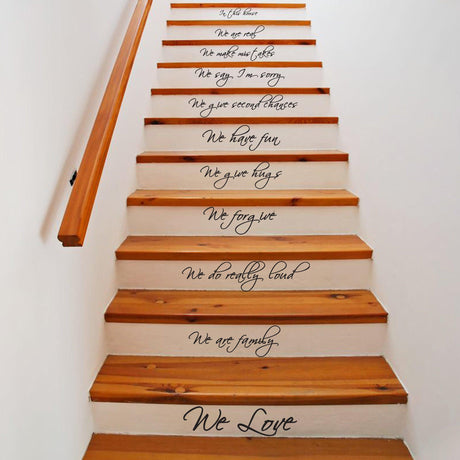
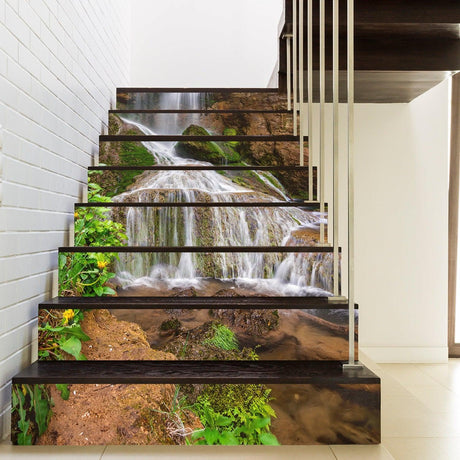
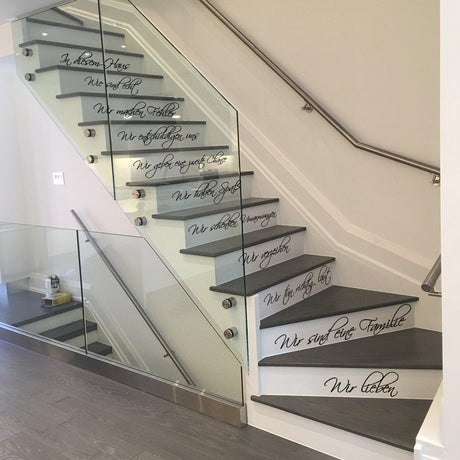
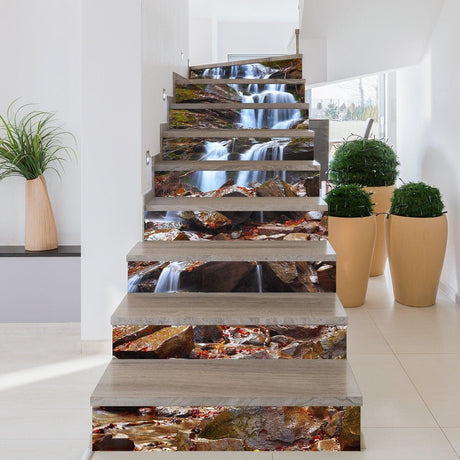
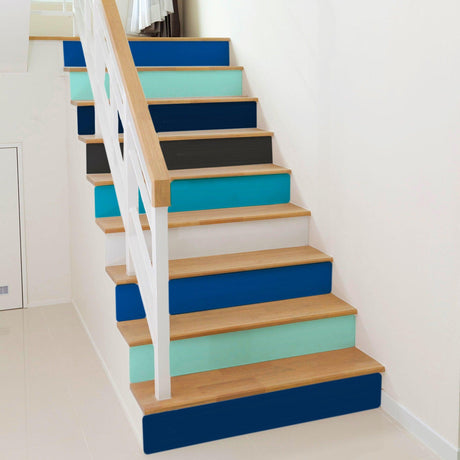
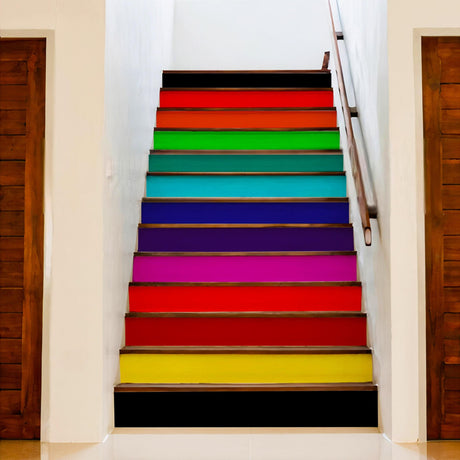
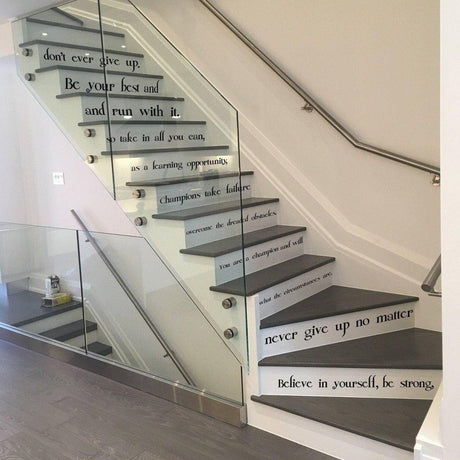
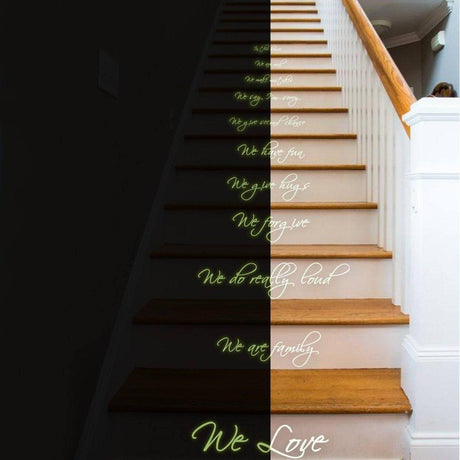
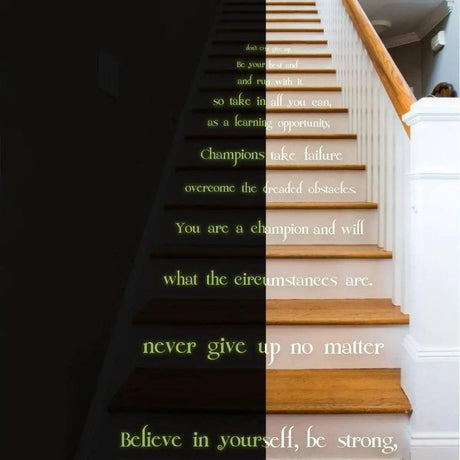
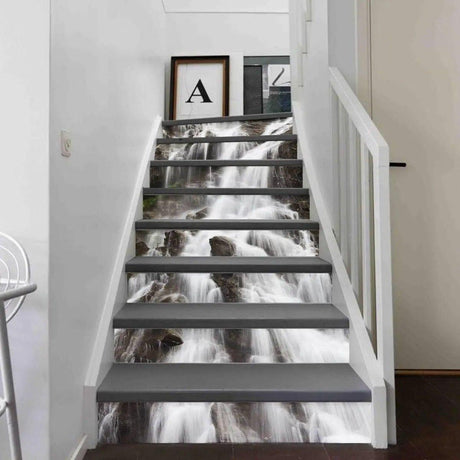
Most staircases look neutral until you notice chipped paint, uneven color, or a style mismatch between floor and risers. Full renovation means sanding, repainting, or tiling, which takes time and money. Stair riser decals and stair stickers offer a different route. They upgrade the vertical face of each step without structural work. The result can look like custom tile or printed risers, but installed in hours, not days.
This guide explains how stair riser decals work, where decals for stairs actually hold well, how peel and stick stair riser decals behave on high-traffic staircases, and how to measure and install them so the final look feels intentional.
What are stair riser decals, stair decals, and staircase stickers, and are stair stickers the same thing?
Stair riser decals are vinyl panels designed specifically for the vertical face of each step. Stair decals, stair stickers, staircase stickers, and even a single stair decal are variations in language, not function. In practice, they refer to the same idea: printed adhesive panels used as stair riser decor.
The riser is the upright part of the stair, not the horizontal tread where you step. This matters because risers experience far less friction. That is why peel and stick stair riser decals focus on vertical adhesion rather than slip resistance. Most modern stair riser stickers come as trim-to-fit vinyl panels. You measure your riser height and width, apply the panel, and trim the edges cleanly.
People choose decals for stairs for several reasons. They want to hide scuffs. They want to introduce patterns without repainting. They want faux tile or geometric effects without grout. In rental homes, stair stickers create visible change without permanent renovation.
Stair riser decor works best when it feels integrated. If alignment is consistent and edges are finished neatly, staircase stickers can look like part of the original architectural design rather than an add-on.
What is the difference between decals for stairs and stickers for stairs?
In search behavior, “decals for stairs” often suggests full riser panels, while “stickers for stairs” may sound smaller or decorative. In real use, both usually describe full-width vinyl riser panels.
The difference is not in the word but in the thickness of vinyl, adhesive type, and print quality. The better question is whether the product is designed for stair risers and whether it allows trimming for clean edges.
Where can I use decals for stairs, and what surfaces work best for stair riser stickers?
Surface compatibility determines long-term success. Stair riser decals work best on smooth, sealed, stable surfaces such as painted wood, sealed MDF, laminate, and tile. The adhesive bonds consistently when the surface is clean and not chalky.
Before applying any stair riser stickers, check whether the paint layer is firm. If you wipe the riser with a dry cloth and see powdery residue, the paint is unstable. Decals for stairs will stick to that weak layer, not to the solid surface beneath, and lifting may occur later.
Good substrates for stairs stickers include sealed hardwood risers, laminated risers, tile, and smooth composite boards. Riskier surfaces include rough-textured paint, unsealed wood, and flaking finishes. In entry staircases exposed to moisture and dirt, proper degreasing becomes critical.
To prepare properly, follow these steps:
- Clean the riser thoroughly to remove dust and grease.
- Degrease with a suitable cleaner and allow it to dry fully.
- Lightly sand unstable paint if needed and wipe clean again.
- Ensure the surface is completely dry before applying.
Skipping preparation is the main reason staircase stickers fail early. A stable, smooth base allows stair riser decals to sit flat and resist edge lifting. If you treat prep as part of the design process, not a chore, the finished result looks sharper and lasts longer.
Can stair decals go on old painted risers?
They can, but only if the paint layer is intact. If paint is peeling or chalking, fix the surface first. A small amount of prep saves you from redoing multiple risers later.
Are peel and stick stair riser decals durable, and do stair stickers peel at edges?
Peel and stick stair riser decals are durable because they are placed on risers, not on treads. Risers receive minimal shoe friction. The real durability factors are cleaning methods, edge trimming, and temperature variation.
Edge lifting usually happens for three reasons: insufficient degreasing, trimming exactly into tight corners without tolerance, or exposure to strong sunlight near windows. When vinyl expands and contracts slightly with temperature change, edges need a tiny buffer zone to stay flat.
On family staircases, the main stress comes from vacuum cleaners, mops, and occasional kicks. High-quality stair decals withstand this if edges are pressed firmly and trimmed cleanly. If one panel gets damaged, replacing a single stair riser sticker is simpler than repainting an entire staircase.
Common causes of early lifting include:
- Applying on dusty or oily surfaces.
- Cutting the decal flush into corners with no margin.
- Applying during very cold conditions.
- Failing to press edges firmly after trimming.
Stickers for stairs do not affect slip risk because you do not step on risers. The only safety concern is lifted edges. When properly installed, stair riser decor is stable and visually durable.
How long do stair riser decals last?
Longevity depends on surface condition and cleaning habits. On properly prepared risers inside a dry hallway, stair decals can maintain their appearance for years. On high-moisture entry stairs, inspection and occasional edge pressing may be required.
How do I measure, install, and remove stair riser decals correctly?
Precision makes the difference between “DIY” and “designed.” Staircases are rarely perfectly uniform. Even in new homes, riser height and width can vary slightly from step to step. Measure each riser individually.
Start by measuring height and width for every riser. Use the smallest measurement as a reference when pre-cutting panels, or trim each stair riser decal individually after positioning. Align from a consistent horizontal reference line so patterns remain straight across the staircase.
Installation works best when done gradually. Position the decal lightly, align it visually, then press from the center outward to push air toward the edges. After adhesion, trim carefully with a sharp blade, leaving a subtle margin rather than forcing vinyl tightly into corners.
To keep alignment consistent:
- Measure each riser separately.
- Apply from the center outward.
- Trim after adhesion, not before.
- Leave a minimal tolerance at edges.
Removal is straightforward. Peel slowly at a low angle. If the adhesive resists, mild warmth softens it. Avoid aggressive scraping. Any remaining adhesive residue can be cleaned with a suitable surface cleaner.
When done calmly, peel and stick stair riser decals can be removed without damaging well-bonded paint.
How do I choose the right design and size for stair riser decor?
Design scale matters. A busy pattern on narrow stairs can feel overwhelming. A large geometric pattern on wide stairs can look bold and intentional. Stair riser decor should relate to hallway width, wall color, and floor finish.
If your hallway already contains strong textures, choose calmer stair decals. If your hallway is neutral, staircase stickers can become the focal point. Faux tile designs mimic ceramic patterns without grout. Minimalist stripes or gradients create a contemporary look.
Matte finishes usually look cleaner in stairwells because mixed lighting can create reflections on gloss surfaces. Gloss stair decal finishes can appear sharper but may highlight unevenness or dust more easily.
Before committing, visualize the full staircase as one vertical composition. Patterns should align consistently from step to step. The goal is cohesion, not random decoration. Well-aligned stair riser stickers look like part of the architecture.
When are stair decals better than paint or tile?
Stair decals are ideal when you want speed, reversibility, and less disruption. Paint requires sanding, priming, drying time, and maintenance. Tile requires installation expertise and structural changes. Peel and stick stair riser decals require preparation and precision, but no demolition.
For rentals, stairs stickers provide visible change without permanent alteration. For homeowners preparing to sell, stair riser decor refreshes a dated staircase quickly. For design experiments, a stair decal allows you to test bold patterns without long-term commitment.
The advantage lies in flexibility. You can update style later without removing structural materials. When installed properly, decals for stairs provide a sharp visual upgrade with lower cost and less mess than traditional renovation.
It will also be interesting
If you are upgrading stairs, you may also be considering coordinated walls or event decor. These related categories help you plan patterns, materials, and removable solutions across your space.
Read less